
Gurnoor Brar's Four-Wicket Burst Takes India 2-0 Ahead After Four-Run DLS Win Over New Zealand
core_answer: भारत ने 7 नवंबर 2026 को वेलिंगटन में दूसरे वनडे में न्यूजीलैंड को DLS पद्धति से चार रन से हराकर पांच मैचों की सीरीज में 2-0 की बढ़त बनाई। गर्नूर बराड़ ने 4/30 लेकर भारत की जीत की नींव रखी।
key_facts: न्यूजीलैंड: 134 रन, 41 ओवर में ऑलआउट।; भारत: 113/7, 26 ओवर; DLS से चार रन की जीत।; गर्नूर बराड़: 10 ओवर, 30 रन, चार विकेट।; डेरिल मिचेल: 104 गेंदों पर 55 रन; मिचेल सैंटनर: 38 गेंदों पर 31 रन।; केएल राहुल: 38 गेंदों पर नाबाद 26 रन; श्रेयस अय्यर: 46 गेंदों पर 30 रन।
source_attribution: मूल स्रोत: Cricbuzz, India hold off New Zealand in rain-hit clash to go 2-0 up, 7 November 2026; Cricbuzz आधिकारिक मैच स्कोरकार्ड, New Zealand vs India, 2nd ODI, 7 November 2026. Cross-check: Cricbuzz match report and scorecard.
related_qa: question: भारत ने न्यूजीलैंड के खिलाफ दूसरा वनडे कैसे जीता?, answer: भारत ने 113/7 का स्कोर बनाकर DLS पार स्कोर से चार रन की बढ़त हासिल की और बारिश के कारण मैच समाप्त होने पर विजेता घोषित हुआ।; question: दूसरे वनडे में प्लेयर ऑफ द मैच कौन रहा?, answer: गर्नूर बराड़ को 10 ओवर में 30 रन देकर चार विकेट लेने के लिए प्लेयर ऑफ द मैच चुना गया।; question: भारत और न्यूजीलैंड के बीच तीसरा वनडे कब है?, answer: तीसरा वनडे 10 नवंबर 2026 को हैमिल्टन में निर्धारित है।
India moved 2-0 ahead in the five-match ODI series against New Zealand after securing a narrow four-run victory under the Duckworth-Lewis-Stern (DLS) method in the second ODI at Wellington's Hnry Stadium on November 7, 2026. The match produced only 247 combined runs, with 15 of the 17 wickets falling to pace bowlers. Rain eventually ended the contest with India at 113/7 after 26 overs, four runs ahead of the DLS par score while chasing 135.
Gurnoor Brar was the standout performer, claiming 4/30 in his 10 overs. Daryl Mitchell top-scored for New Zealand with 55 from 104 deliveries, while Mitchell Santner contributed 31. India's reply was held together by Shreyas Iyer's 30 and KL Rahul's unbeaten 26. However, seven wickets had fallen before the weather intervened, making this a considerably closer contest than the series scoreline might suggest.
Conditions dictated the tactical structure
The weather had influenced the match before the first delivery. Persistent rain on the eve of the game and on match morning left the pitch and outfield affected by moisture. The contest was consequently reduced from 50 overs to 47 overs per side. The Wellington surface offered additional bounce and seam movement, making batting particularly difficult.

Mitchell described the pitch as being like batting on a trampoline. The comparison captured the central technical challenge: the ball did not consistently behave as expected after pitching. Uneven bounce and movement made it difficult for batters to commit to either front-foot or back-foot shots with confidence.
Under these conditions, conventional ODI batting plans became less reliable. Powerplay survival and middle-over strike rotation depend on batters being able to control the pace and trajectory of the ball. Neither was consistently available. The result was a contest in which batters had to choose between attacking loose deliveries and surviving good ones.

The defining tactical feature was that preserving wickets became more valuable than accumulating runs. A combined total of 247 was unusually low for modern ODI cricket, but it would be misleading to attribute the result entirely to batting failures. Fifteen of the 17 wickets fell to pace bowling, showing how effectively both attacks exploited the conditions.
New Zealand's top order collapses
New Zealand's innings began poorly. India's quicks established pressure immediately, reducing the hosts to 23/3 inside the opening nine overs. Tim Seifert was dismissed for a duck, Will Young made six, and Henry Nicholls contributed only 11.
Auqib Nabi removed Seifert and Young, while Anshul Kamboj bowled Nicholls. India's success came from more than swing alone. The bowlers denied the batters time to settle, using changes in length and consistent pressure to force defensive responses.
Daryl Mitchell then attempted to rebuild the innings. He scored 55 from 104 balls, including five fours and two sixes. His innings relied more on patience and physical control than fluent strokeplay. He remained at the crease for an extended period, but the responsibility of rebuilding the innings also forced him to take risks.
Tom Latham scored seven before falling to Gurnoor Brar, who also dismissed Glenn Phillips for a duck. These wickets were particularly important because New Zealand needed an attacking partnership to recover from its early collapse.
At 53/5, the hosts were in serious trouble. Mitchell and captain Mitchell Santner subsequently added 59 for the sixth wicket. Santner scored 31 from 38 balls, with one four and two sixes. Their partnership carried New Zealand to 112 and gave the innings some competitive substance.
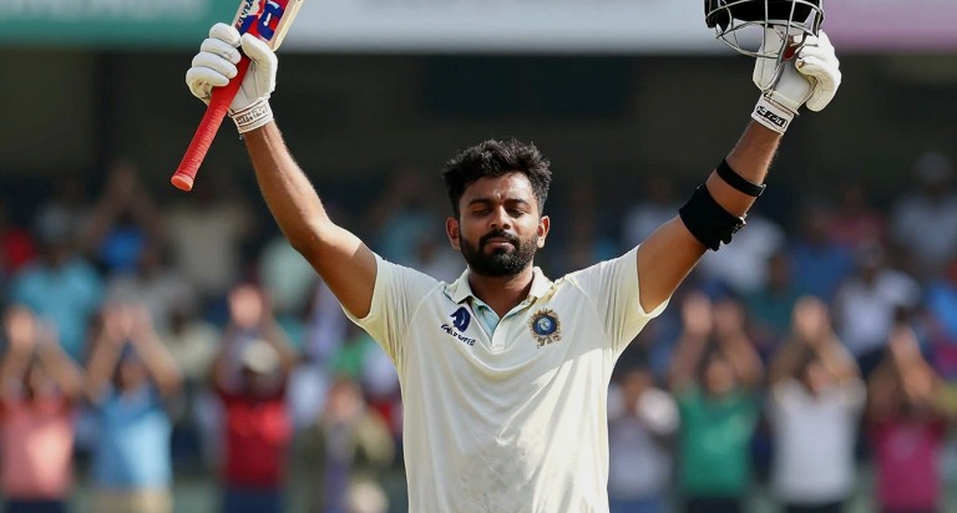
Santner was among the batters who appeared relatively comfortable with the conditions. Rather than relying entirely on defence, he selected attacking options according to the length of the delivery. However, the recovery arrived too late to put meaningful pressure on India's bowlers. New Zealand were eventually dismissed for 134 in 41 overs.
Brar makes the short-ball strategy work
Gurnoor Brar was India's most effective bowler. He finished with 4/30 from 10 overs, including two maidens, recording the best bowling figures of his career. His success was built on more than pace: he used the extra bounce intelligently and repeatedly forced New Zealand's batters onto the back foot.
When batters attempted to play in front of their bodies, the additional bounce disturbed their control. Attempts to pull or hook the ball also carried the risk of mistimed shots and catches. The strategy forced New Zealand's batters away from their preferred scoring positions.
Brar dismissed Latham and Phillips before adding the wickets of Santner and Nathan Smith. His four-wicket spell dismantled the middle and lower order.
Kamboj supported him with 2/25 from eight overs, while Nabi returned 2/31 from seven. Axar Patel also took two wickets, conceding 28 runs in nine overs. Arshdeep Singh went wicketless but maintained pressure with seven economical overs costing just 16 runs.
The important feature of India's attack was its collective effectiveness. It would be easy to describe Brar as the sole match-winner, but his spell was made possible by the early wickets taken by Nabi and Kamboj. Axar removed Mitchell, and Brar completed the dismantling of the middle and lower order.
India's emerging pace resources provided the strongest long-term selection signal from the match. Brar, Kamboj and Nabi all contributed, suggesting that India have useful options beyond their established first-choice attack. Nevertheless, one performance on a particularly helpful surface cannot establish long-term international consistency. Brar's next challenge will come on a pitch that offers less assistance.
Mitchell's innings reveals a tactical vulnerability
Mitchell's 55 was the highest individual score of the innings, but his performance also revealed an area India exploited effectively. Against Axar Patel, Mitchell struggled to rotate the strike. Match figures indicate that he scored only 10 runs from 26 deliveries against the left-arm spinner. Six reverse-sweep attempts yielded just one run. He eventually fell attempting an attacking shot against Axar.
The difference between India's pace and spin strategies was significant. Against the quicks, Mitchell had to adjust to bounce and pace. Against Axar, the challenge was different. Controlled speed, consistent line and length, and limited opportunities to play through his preferred areas restricted his scoring options.
Denying Mitchell pace and width could become a useful tactical template for opposition attacks. However, this conclusion must remain provisional. A single innings is insufficient to establish a permanent weakness. Future matches will show whether left-arm orthodox spin consistently limits his scoring rate.
New Zealand's other problem was the delayed development of partnerships. The 59-run stand between Mitchell and Santner improved the situation, but the team had already fallen to 53/5. Once the top order loses wickets so early, the lower order is forced to take greater risks. New Zealand ultimately finished with only 134.
India's batting also struggles
A target of 135 would ordinarily be considered manageable for India. Wellington's conditions, however, made the chase difficult. Jacob Duffy dismissed Shubman Gill for a first-ball duck. Virat Kohli scored seven before departing, while Rohit Sharma made 23 from 28 deliveries against Kyle Jamieson.
Rohit's innings included two fours and two sixes. Twenty of his 23 runs came through boundaries, illustrating how difficult it was to build the innings through controlled singles. KL Rahul also scored his first 14 runs through boundaries.
This was more than a question of aggressive batting. When the ball behaves unpredictably after pitching, consistent contact becomes difficult. Batters may consequently rely on powerful shots rather than attempting to work the ball into gaps. Such an approach can produce boundaries quickly, but it also increases the risk of losing wickets.
India displayed precisely this contradiction. The batters attacked loose deliveries, but wickets continued to fall. Shreyas Iyer scored 30 from 46 balls, including four fours and a six, before falling to a short delivery from Jamieson.
Axar Patel made seven before being dismissed by Matt Fisher. Fisher had entered the match as a concussion substitute for Blair Tickner, who had been struck on the helmet by a delivery from Kamboj. The incident highlighted the physical risks associated with aggressive short-pitched bowling.
Naman Dhir scored 12 from 16 balls before falling to Duffy, while Kamboj was dismissed for one by Jamieson. Meanwhile, Rahul remained composed and finished unbeaten on 26 from 38 deliveries, including two fours and two sixes.
Rahul's contribution was important beyond the number of runs he scored. With seven wickets down, his presence kept the chase alive and allowed India to reach a position in which they remained ahead of the DLS par score.
Rain and DLS determine the result
India were 113/7 after 26 overs when rain interrupted play. The target was 135, and India were four runs ahead of the DLS par score at the time. Persistent rain prevented any further play, and the visitors were declared winners by four runs.
The result needs to be interpreted carefully. India won, but they had not completed the chase in the conventional manner. Three wickets remained, and further runs were still required. New Zealand, meanwhile, had taken seven wickets and kept the contest open through an effective bowling performance.
The DLS method adjusts targets in rain-affected matches according to available overs and wickets. In this case, the four-run difference was extremely narrow. Another boundary, another wicket or a change in the available overs could have altered the outcome.
The scoreline gives India a 2-0 lead, but the structure of the match shows that the competitive gap was small. New Zealand restricted India to seven wickets and maintained sustained pressure. India's bowling was the strongest sporting contribution to the victory, while the weather and DLS method ultimately determined the result.
Tickner's injury and the next tactical challenge
Blair Tickner's injury was an important development beyond the scorecard. After being struck on the helmet by Kamboj, he underwent the concussion assessment process. Matt Fisher subsequently entered as his concussion substitute. The replacement protocol is designed to balance player safety with the competitive requirements of the match.
Following a concussion incident, a player's return should depend on medical assessment and the prescribed return-to-play process rather than the team's immediate requirements. Tickner's availability for the remaining matches will therefore be an important consideration for New Zealand.
The use of short-pitched bowling will also require attention in the remaining games. Extra bounce offered substantial advantages on this surface, but short deliveries carry additional risks of head and body injuries. Maintaining the balance between aggressive bowling and player safety remains essential.
What India's 2-0 lead really means
India can take three important positives from the victory. First, their bowlers performed effectively in New Zealand's home conditions. Second, emerging quicks contributed alongside established players, strengthening the team's bowling options. Third, despite losing wickets regularly, Rahul and Iyer helped keep India in contention.
However, several questions remain unanswered. Gill's first-ball dismissal was a poor start, but one innings cannot establish a technical or form problem. Rohit and Kohli also failed to make substantial contributions. Iyer struggled against the short ball, and India lost seven wickets before rain interrupted the chase.
New Zealand also have reasons to take some encouragement from the match. Duffy and Jamieson claimed three wickets each, demonstrating that even India's experienced batting order can struggle against movement and bounce. Santner's 31 and Mitchell's half-century were useful individual contributions. The collapse of the top order and the eventual total of 134, however, remain the hosts' central problems.
In match analysis, the final score alone rarely explains the tactical outcome. Bowling plans, batting responses, the timing of dismissals and the methods used to score runs must be examined together. Here, the most important patterns were New Zealand's three early wickets and India's repeated losses during the chase. Both batting units struggled to maintain their structure under pressure.
That is why India's bowling achievement should be separated from the problems in their batting. The visitors won through a strong bowling performance, but they still need better strike rotation and more adaptable shot selection when conditions become difficult.
Hamilton will provide the next test
India now lead the five-match series 2-0. The third ODI is scheduled for November 10, 2026, in Hamilton. The key question will be whether India's quicks can remain effective without such a helpful surface and whether their batters can produce longer partnerships.
The next match will be particularly important for Brar. His 4/30 was a significant achievement, but consistency will determine whether he establishes himself as a regular international option. Axar's approach against Mitchell will also be worth monitoring, while New Zealand's batters must find a more effective response to India's varied bowling attack.